The customer called because her dryer was getting very hot. That is the call we take most often, and it almost always means the same thing: the air is not getting out. A dryer has one job beyond tumbling — push hot, wet air outside. When it cannot, the heat stays in the machine.
This one came from Borough Park, and it turned into the kind of job worth showing, because the photos tell the whole story.
What we found behind the wall cap
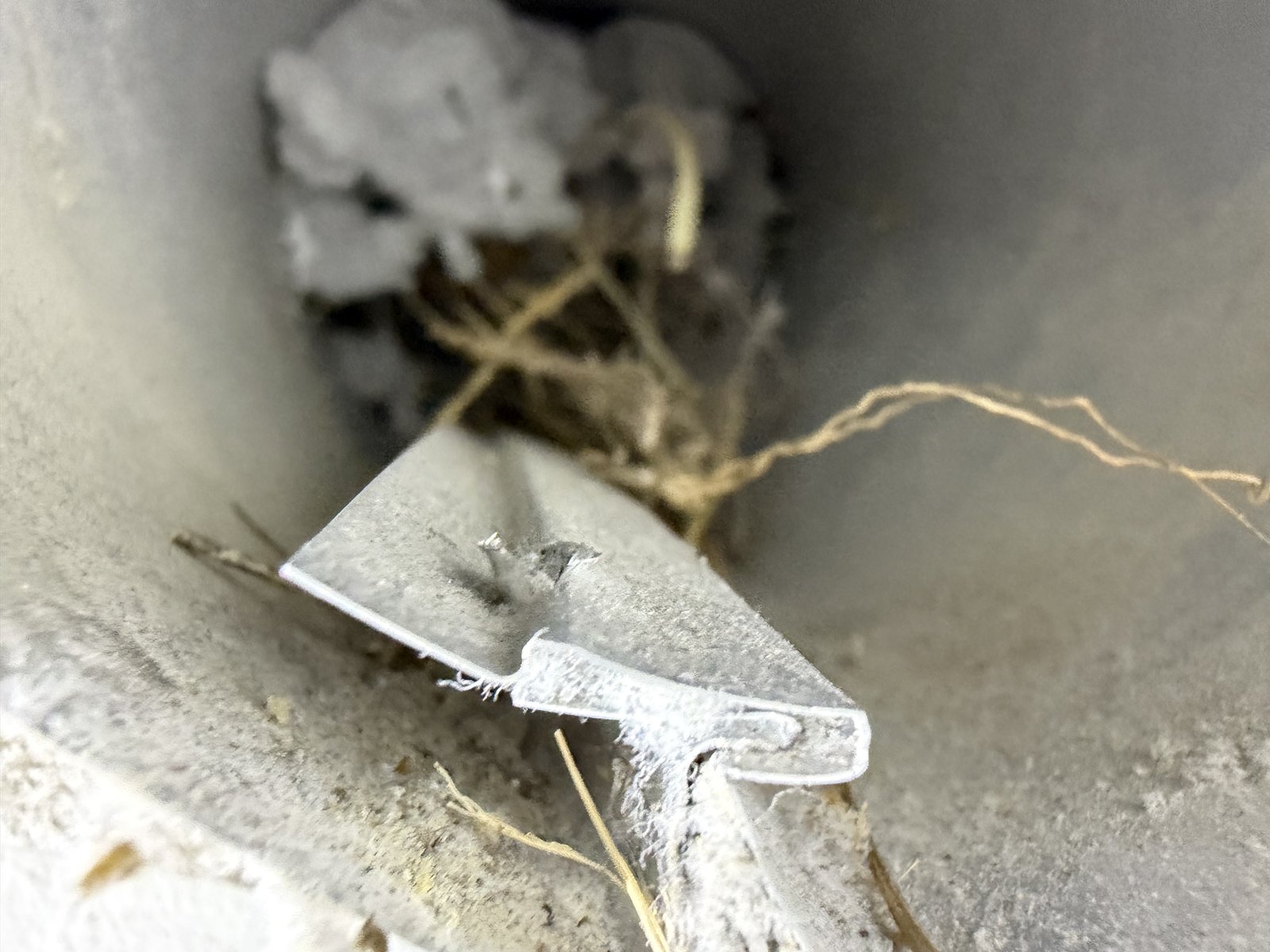
We opened the exterior wall cap and found out why the dryer was cooking itself. A bird had built a full nest inside the vent — straw, twigs and packed lint wedged against the damper flap, holding it open and sealing the duct behind it.
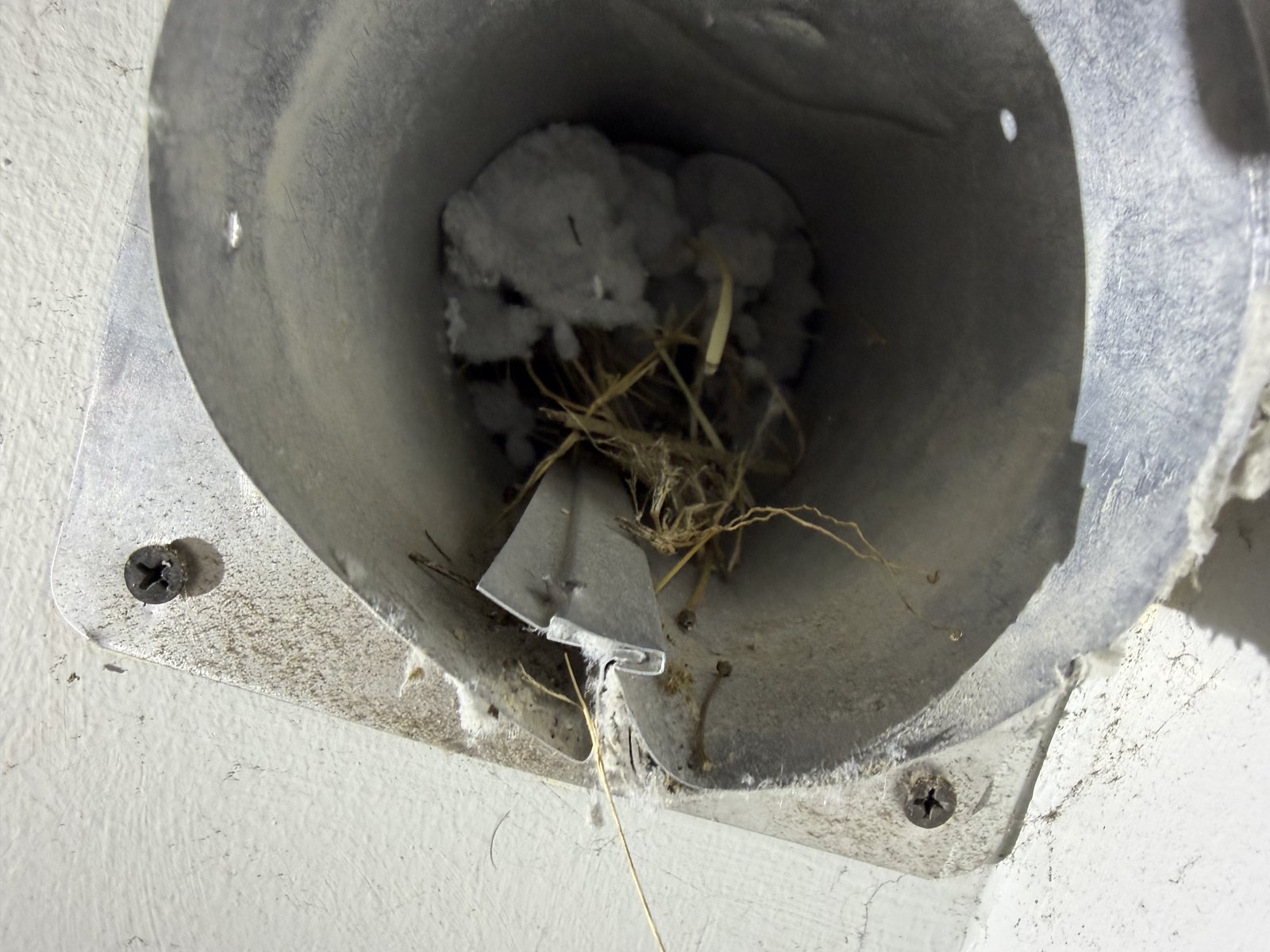
The damper flap is supposed to swing open when the dryer runs and fall closed when it stops. Wedged like this, it could do neither — it could not close against weather and pests, and it could not pass air. Through the cap opening, almost none of the pipe was left.
What we did
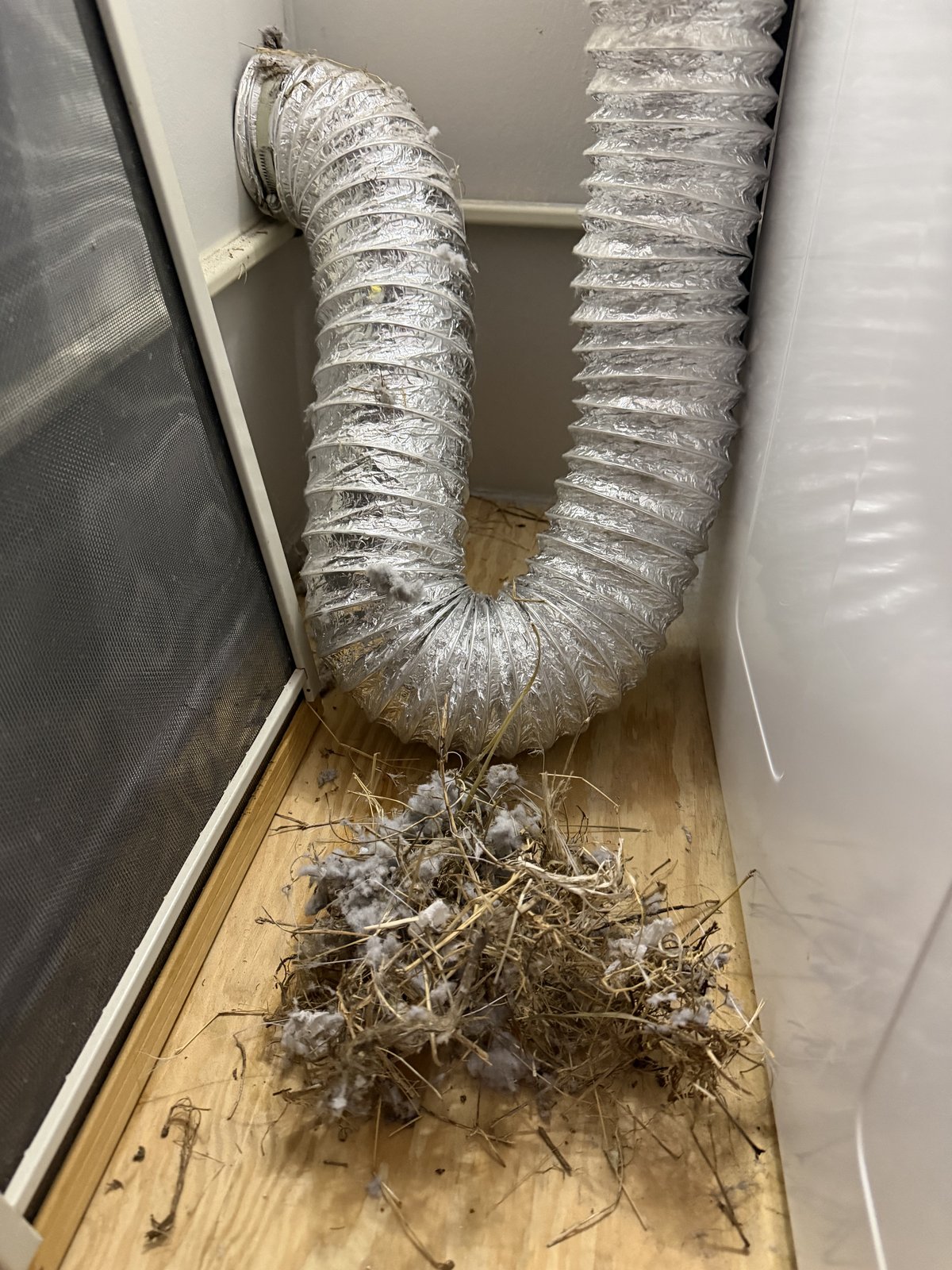
We disconnected the transition duct at the wall, pulled the nest out by hand, and brushed the full line back through to daylight. Then we ran the dryer and confirmed airflow at the cap before reconnecting. What came out of that vent covered the laundry room floor.
Why a blocked vent is a safety problem
A blocked vent is not just a laundry problem. Lint packed against a heat source is how dryer fires start, and a dryer fighting a closed line burns out its heating element early — while running your electric bill up in the meantime. The machine in this job was hot enough to worry the homeowner, which is exactly the right instinct: a dryer that is hot to the touch is telling you something.
How to keep birds out for good
Once a vent has hosted a nest, it will host another — birds come back to spots that worked. The fix is a louvered exterior cover with a bird guard: the flaps still open freely for airflow, but nothing gets in to build. We install them in the same visit. Our guide to bird-proof, pest-resistant dryer vent covers covers the options.
Signs your own vent is blocked
- The dryer is hot to the touch during or after a cycle.
- Clothes need two cycles to dry.
- The laundry room feels warmer and more humid than the rest of the house.
- You have not had the vent cleaned in over a year.
This job was in Borough Park. We serve every Brooklyn neighborhood plus Queens, Manhattan, and the Five Towns on Long Island — and a blocked vent does not fix itself.
Vent Pro NYC
Family-owned. Brooklyn-based. Fully insured.
We’ve cleaned dryer vents and AC ducts in every Brooklyn neighborhood that has them — brownstones, co-ops, condos, ground-floor units with 60-foot roof runs, the lot. Every visit ends with photos of the work and a written report you can send your board or insurance adjuster.
Keep reading
Bird Nests, Squirrels & Pigeon Hazards in Brooklyn Dryer Vents: A Spring & Fall Survival Guide
Every March our phone starts ringing about chirping behind the wall. Here is what is actually living in Brooklyn dryer vents, and what to do about it.
Bird-Proof & Pest-Resistant Dryer Vent Covers: What Actually Works, and What to Avoid
Most covers sold as bird-proof are the worst thing you can put on a dryer. Here are the four things to check before you buy one — and the one product that genuinely earns its place.
The 11 Warning Signs Your Brooklyn Dryer Vent Is Clogged
Eleven specific warning signs we look for on every Brooklyn job, what each one tells us about the run, and the two that should make you unplug the dryer right now.